Case study · Concept build · Grocery & kitchen
Palm & Yam
An African supermarket, bakery and kitchen selling from one storefront — where a bag of rice, a loaf of Agege bread and a hot tray of egusi have to survive the same checkout.
The problem this build is about
African grocers usually run three businesses at once: a shop with shelf-stable goods, a bakery working to its own schedule, and a kitchen cooking to order. Most of them end up with three disconnected things online — a Facebook page for the kitchen, a phone number for the bakery, and nothing at all for the shop.
The interesting constraint is not the catalogue. It is that a single customer wants yam flour, two loaves of bread and a tray of jollof in one transaction, and those three items are ready at three different times.
How the build answers it
One cart spans all ten departments — kitchen, bakery, meat and fish, produce and leaves, swallow and flours, spices and soup bases, drinks, pantry, market shelf, and the Sunday pot bundles. Checkout hands off to Shopify's hosted page, so card data never touches the site and PCI scope stays with Shopify rather than the shop owner.
Fulfilment is deliberately pickup-only. That single decision removes delivery zones, courier integration and the "where is my driver" support load — none of which a first web presence should be carrying. The kitchen items are packed hot at collection time rather than sitting on a shelf waiting.
Decisions worth explaining
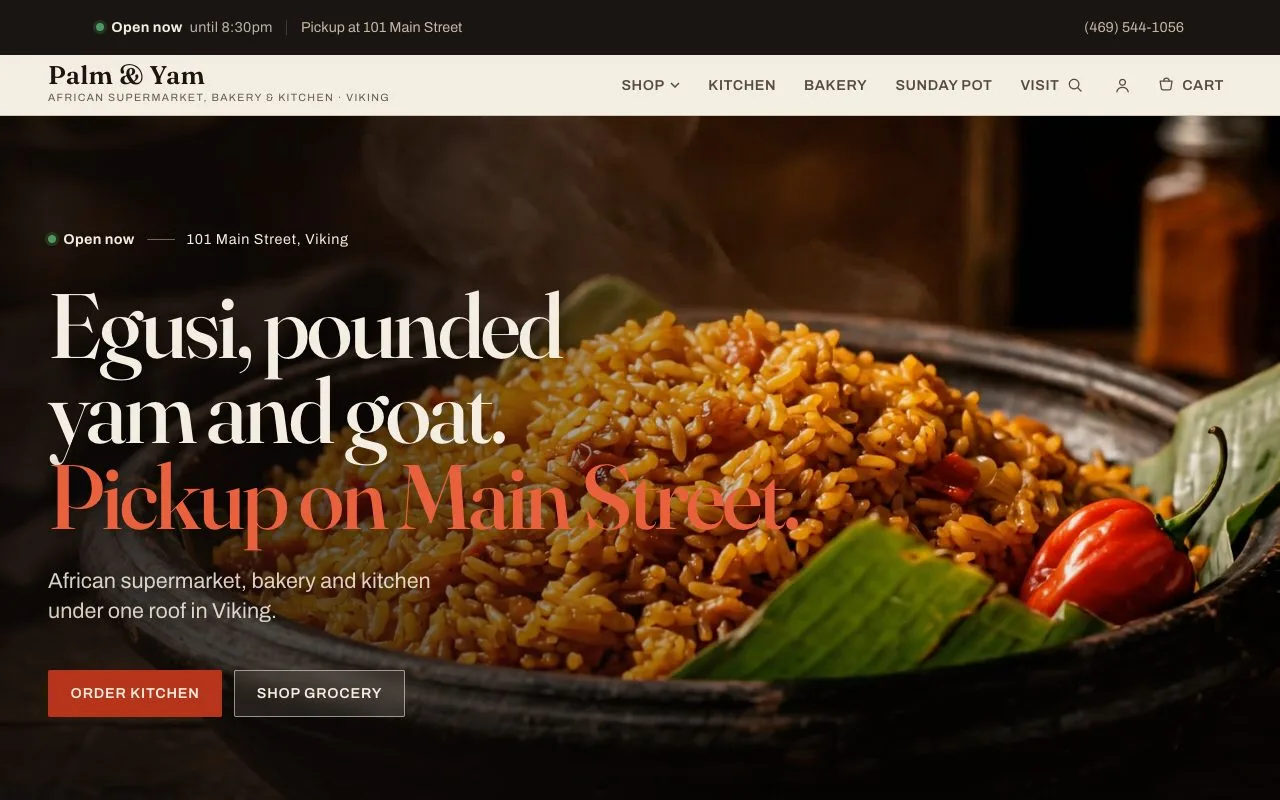
Open/closed state in the header, not a hours table. The bar reads "Open now until 8:30pm" rather than making someone parse a weekly grid against their watch. For a food business that question is the whole visit.
Food photography carries the hero, type stays out of its way. The first screen is a bowl of jollof, not a stock shot of a storefront. In this sector the picture does the selling; the headline just names the dish.
Pickup-only stated on the hero, not discovered at checkout. An abandoned cart at the delivery step is worse than a visitor who leaves in the first ten seconds knowing the terms.
Bundles as a department. The "Sunday pot" groups a full meal into one purchase. It raises basket size without asking the customer to assemble ten ingredients themselves.
Why it is on our own subdomain
This one is a concept build, so it sits at palmandyam.andinetmn.workers.dev rather than on a client-owned domain. It is here to show how the pattern works, not to claim a customer we do not have. Our live client work — TondiMatch, AMACCUL and Sisi Mandarin — is on domains those clients own outright.
If you run something similar
An online shop needs a separate ecommerce scope; store add-ons start at $800. A two-page informational site starts at $200 if you only need the menu and a pickup number. Prices are on the pricing page, and the 60-second planner gives you a number without an email address.
See also web design for Twin Cities restaurants, the full portfolio, or book 15 minutes.